
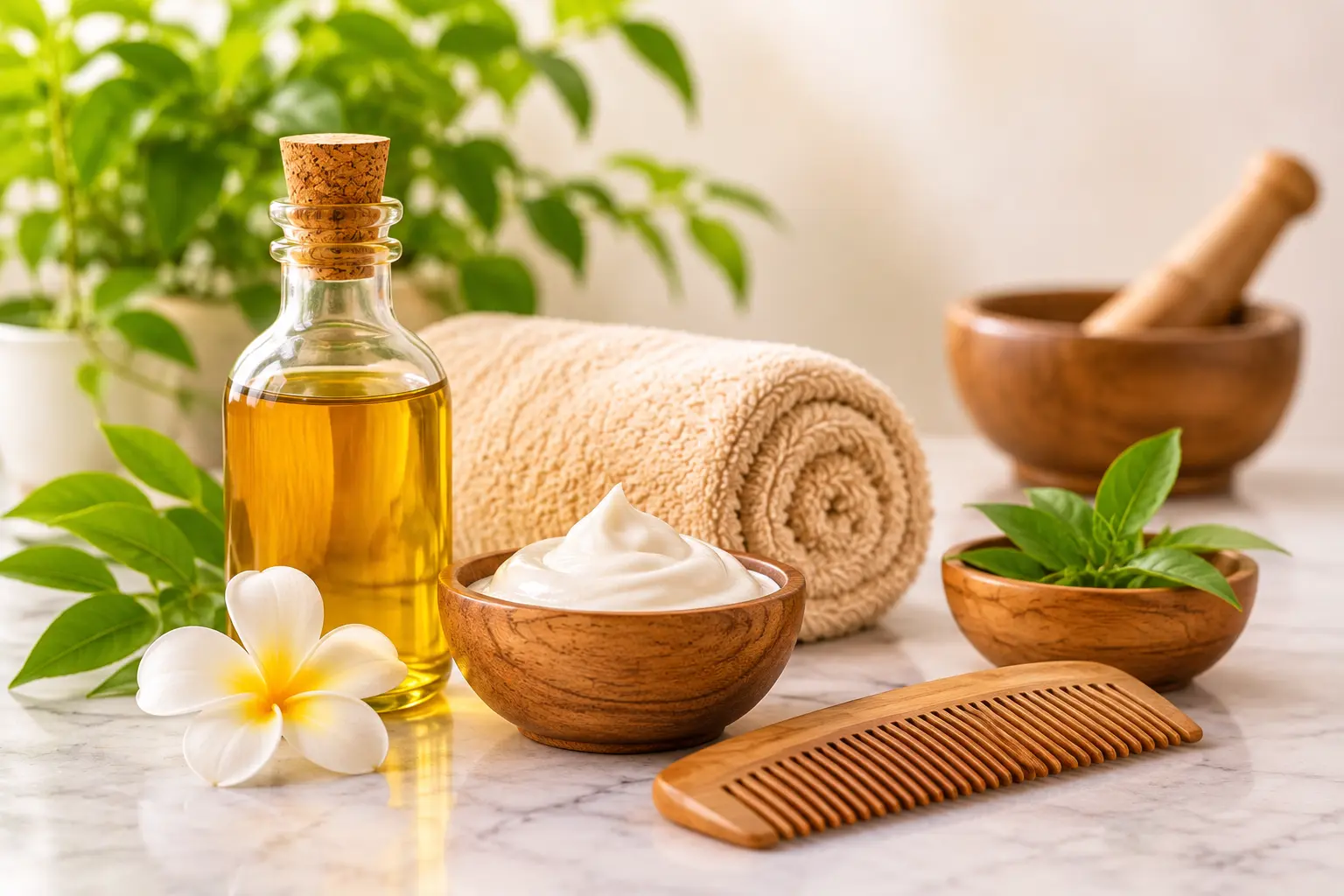
If your skin feels tight and your hair feels rough even though the weather outside is pleasant, your air conditioner may be the cause. This guide explains why indoor AC dries out skin and hair, what Ayurveda suggests in simple terms, and which everyday habits and treatments can help.
In warm-climate cities, November brings milder weather outside. But many people still spend most of the day in air-conditioned homes, offices, cars and malls. Air conditioners cool the air and also lower its humidity. Dry air pulls water out of the skin’s top layer, which can leave skin flaky, itchy or tight, leading to skin diseases. It can also leave hair dry, frizzy and brittle.
Hot showers, harsh soaps, frequent hand washing and not drinking enough water make the dryness worse. Dryness is usually a mild problem, but it is worth fixing early because very dry skin can crack and become irritated.
Ayurveda is a traditional system of medicine. It describes the body through three basic energies called doshas: vata, pitta and kapha. You do not need to know much more than this to follow the advice below.
These are traditional ideas. They are a helpful way to understand the advice, but the habits that actually protect your skin are simple ones, and many are supported by modern dermatology.
Dermatologists, including the American Academy of Dermatology, give similar advice for dry skin. These steps work well alongside any Ayurvedic care.
Abhyanga means massaging the body with warm oil. Oils such as sesame oil or coconut oil are commonly used. In simple terms, oil forms a thin layer on the skin that helps hold in moisture, which is the same job a moisturiser does. Many people also find the massage relaxing.
How to try it at home:
Safety notes: Do not apply oil to broken, infected or very inflamed skin. Be careful on wet floors, as oil can make them slippery. Avoid heavy oils on the face if you get acne. Skip oil massage if you have a fever or feel unwell.
Ayurvedic facials usually combine a gentle cleanse, a face massage and a mask made with natural ingredients. Commonly used ingredients include aloe vera, rose water, sandalwood, honey and milk-based or ghee-based preparations. The goal during dry weather is to cleanse without stripping the skin, hydrate it and calm it.
A few honest points to keep in mind:
Dry air and hot water both strip natural oil from hair and scalp. Simple steps help:
Flaking is not always dry scalp. It can also be dandruff, which is caused by a yeast-like organism on the scalp, and it may need a medicated shampoo. See a doctor if flaking is heavy, itchy or red.
Ayurveda also treats dryness from within, through a practice called snehapana, which means taking medicated ghee or oil by mouth in carefully measured amounts. It is usually done as part of a supervised Panchakarma programme.
Please do not try this on your own. The right amount, type and duration differ from person to person, and it is not suitable for everyone. People with high cholesterol, diabetes, fatty liver, gallbladder problems, digestive problems, or who are pregnant should speak to their doctor first.
What you can safely do every day is include moderate healthy fats in your meals, such as a little ghee, nuts, seeds, olive oil or sesame oil, and eat warm, freshly cooked food. Your doctor can tell you what amount is right for you.
Book an appointment if you notice any of these:
Dry skin can sometimes be linked with other health conditions, so a proper check is worthwhile.
Post tags :
Share now :


Ayurvedic treatments that balance your body, mind and spirit- the natural way.
Our Doors Are Open for Your Healing Journey.
Saif tower, 3rd floor, Electra street(Same building as Lulu Express) Abudhabi, UAE, P.O Box 3455