
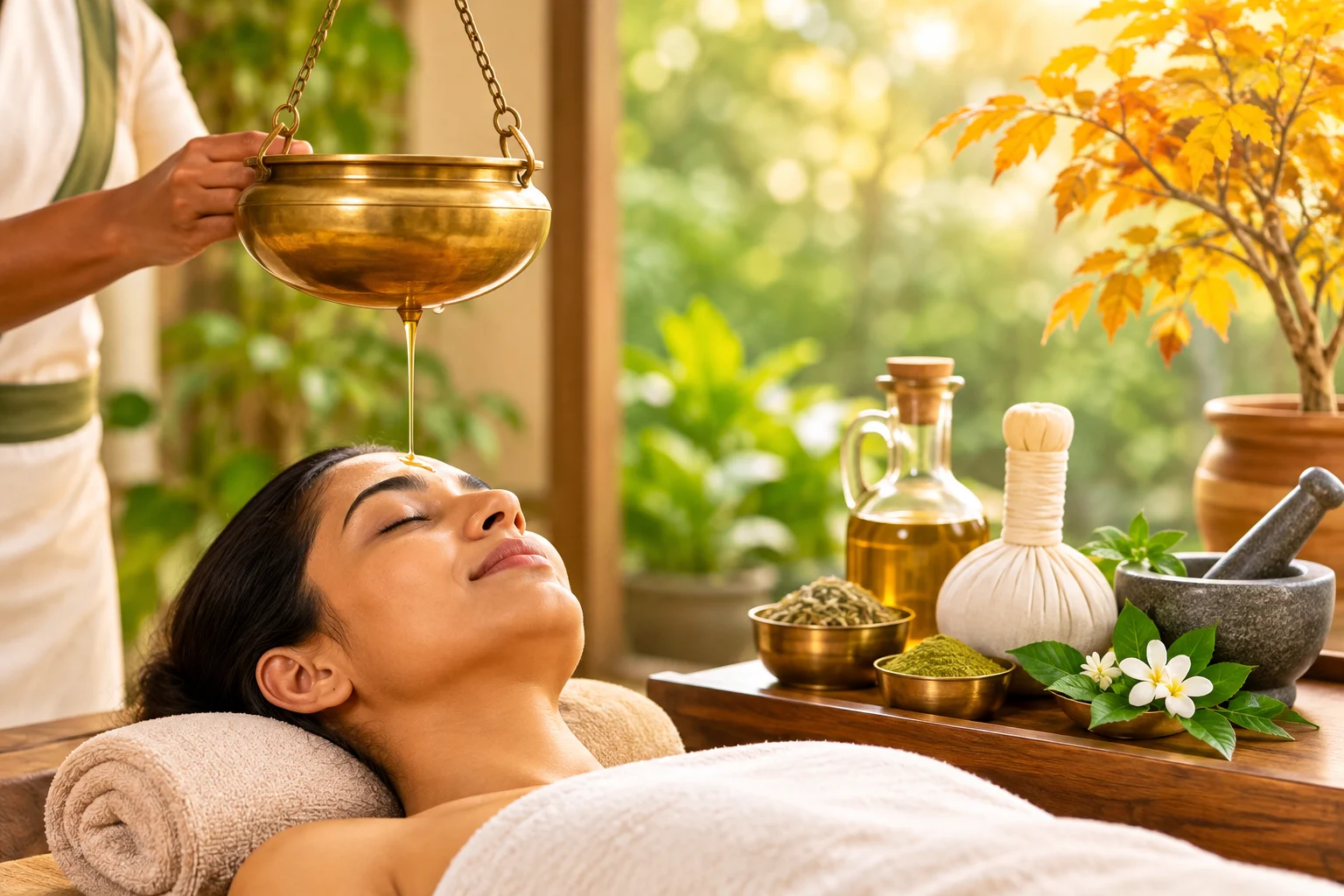
Every autumn, the same question reaches our front desk: is this a good time for Panchakarma Therapy? Abu Dhabi’s summer heat is easing and the year is heading toward its close, so many people feel a natural urge to pause and reset. Ayurveda gives a thoughtful answer. For many people, November can be a well-suited window. Whether it suits you depends on your own health, and that is something only a proper assessment can tell.
This article covers what the classical texts say about seasons and cleansing, why this month may work for some people, who should wait, and how a personalised plan is built. It is educational and does not replace a consultation with a qualified doctor.
Panchakarma means “five actions.” It is Ayurveda’s classical system of therapeutic cleansing (shodhana). It is not a juice fast or a one-day spa treatment. It is a supervised, step-by-step programme in which the body is prepared, gently cleansed, and then rebuilt.
The five classical procedures are vamana (therapeutic emesis), virechana (purgation), basti (medicated enema), nasya (herbal nasal therapy) and raktamokshana (bloodletting, used only in selected cases). No programme uses all five by default. A physician chooses only what fits your constitution, condition and strength. Our Panchakarma Detox Therapy page gives an overview of how this works at our centre.
Ayurveda divides the year into six seasons (ritus). Classical guidance on seasonal living (ritucharya) explains that doshas tend to build up in one season, become aggravated in the next, and settle in another. Cleansing is traditionally timed to clear what has accumulated before it causes trouble.
Two ideas matter here:
One caveat: the UAE does not have four neat seasons. Our physicians therefore adapt classical guidance to local conditions and to how your body is responding right now.
In the Gulf, November sits where those two seasonal ideas meet. The long hot months are behind us and cooler, drier air is arriving. This matters for four reasons.
Steadier digestion. As temperatures fall, many people notice a better appetite and easier digestion. Panchakarma depends on healthy Agni to process medicated ghee and herbal preparations, so this helps.
A chance to clear the summer’s load. Months of heat, irregular meals, iced drinks, air-conditioned rooms and disturbed sleep can leave people feeling heavy, bloated or tired. Ayurveda calls this residue ama and sees a cleansing programme as a way to address it before the colder months.
Greater comfort. Oil therapies, herbal steam and rest periods are far easier to enjoy in mild weather than in peak heat.
Preparing for Vata season. Early winter brings dryness, which can appear as rough skin, stiff joints or restless sleep. Cleansing followed by rejuvenation (rasayana) is traditionally meant to leave the body better nourished for this period. Our guides to a simple November daily routine and skin and hair care in AC season make useful companions.
None of this makes November the only suitable time. For many people it is simply a favourable one.
A well-run programme moves through three stages.
The length of a programme depends on your health, your goals and your doctor’s plan. That is why we don’t promise a fixed number of days before a consultation.
After assessment, Panchakarma may be considered for people who:
The aim is not a dramatic “flush.” It is a gradual, sustainable improvement in digestion, energy, sleep and comfort.
Panchakarma is not suitable for everyone. Some people need a modified approach or should postpone. Please tell your doctor if you:
In such cases, gentler therapies may be recommended instead.
Panchakarma has been practised for centuries and is described extensively in classical texts. Modern research is growing, but much of it consists of small studies, and results vary. The popular idea of “detoxing” is also not measured in the same way by conventional medicine. For this reason we describe Panchakarma as a traditional, supportive approach, not a cure. We encourage you to continue any ongoing medical care. A reputable practitioner will be honest about both the potential and the limits of treatment.
Two people can arrive with the same complaint and need entirely different plans. Your Ayurvedic doctor considers your prakriti (natural constitution), your current imbalance (vikriti), the strength of your Agni, age, occupation, sleep, diet, medical history and the season.
That is why every journey at Sathwa begins with a detailed consultation and continues with monitoring throughout. If any centre offers a fixed package without asking about your health, treat that as a warning sign. You can read about the practitioners who will guide you on our Our Team page.
If you have been wondering whether this is the right season for you, the best next step is a conversation, not a commitment. At Sathwa Ayurveda Medical Center, our doctors will review your health history, constitution and goals. They will tell you honestly whether Panchakarma suits you now, whether preparation or a gentler therapy is wiser first, or whether it is best to wait.
📍 Saif Tower, 3rd Floor, Electra Street (same building as Lulu Express), Abu Dhabi
📞 +971 54 232 0214
🕗 8:00 AM to 10:00 PM (closed on Sundays and public holidays)
Book your personalised consultation here or reach us through our Contact page. Your plan should be built around you, and it starts with a proper medical assessment.
Disclaimer: This article is for general education and is not a substitute for personal medical advice, diagnosis or treatment. Always consult a qualified healthcare professional before starting any therapy, and do not stop prescribed medication without medical guidance.
Post tags :
Share now :


Ayurvedic treatments that balance your body, mind and spirit- the natural way.
Our Doors Are Open for Your Healing Journey.
Saif tower, 3rd floor, Electra street(Same building as Lulu Express) Abudhabi, UAE, P.O Box 3455