
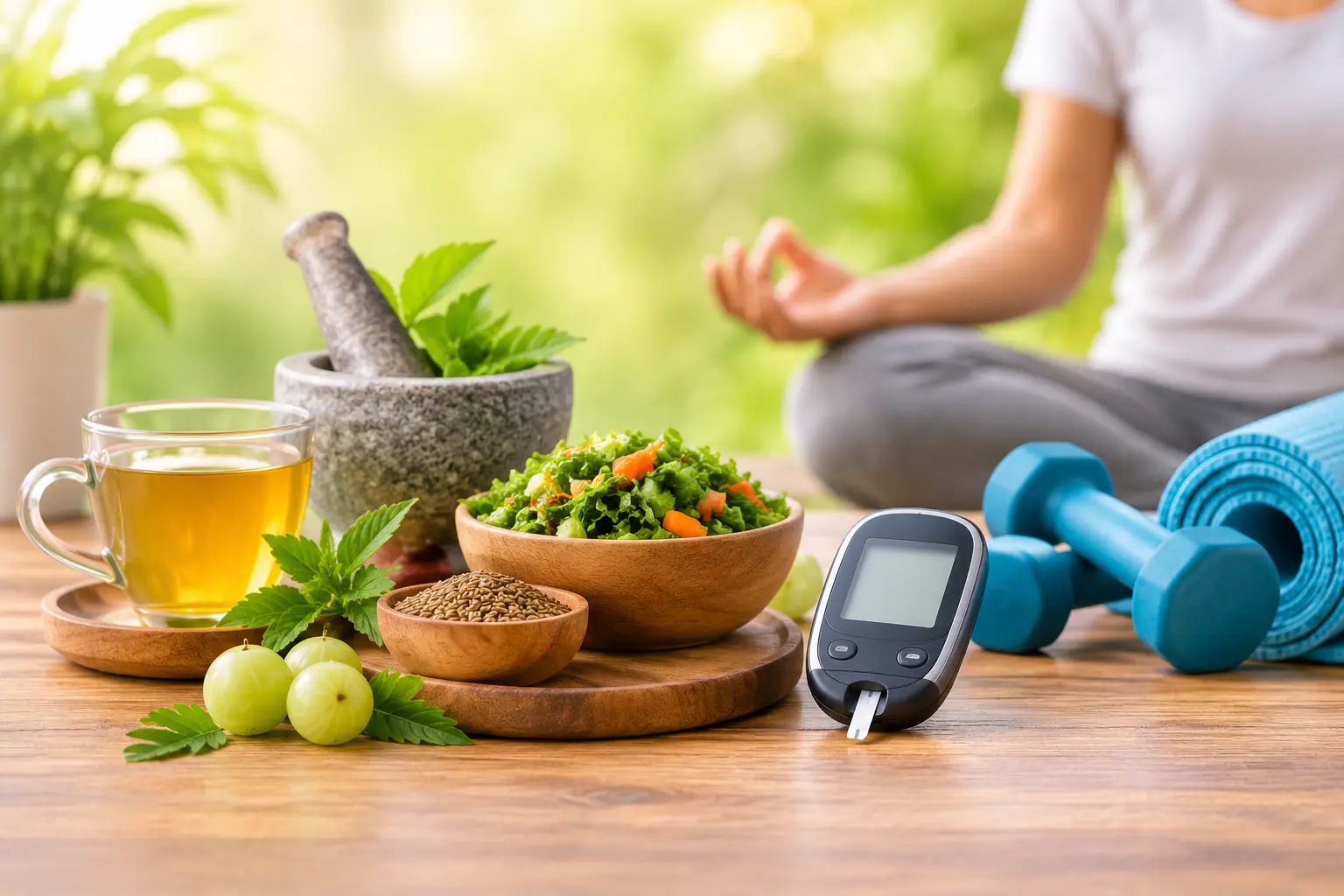
Diabetes is a long-term condition that needs ongoing medical supervision, medication (when prescribed), blood-sugar monitoring, and guidance from your doctor or endocrinologist. Ayurveda has long described related metabolic imbalances and offers practical ideas around food, movement, sleep, and stress that many people find helpful as complementary support.
This article is strictly informational. The suggestions below are general lifestyle ideas only. They do not replace prescribed treatment, insulin, monitoring, or professional medical advice. Never stop, reduce, or change any medicine without talking to your doctor. Always discuss new dietary patterns, exercise, or traditional therapies with both your physician and a qualified Ayurvedic practitioner—especially if you have complications, are pregnant, take multiple medicines, or have other health conditions.
Ayurveda looks at health through the lens of balanced digestion, steady energy, clear bodily channels, and daily routines that match a person’s constitution and current state. Traditional descriptions link excess heavy or sweet foods, limited activity, irregular sleep, and ongoing stress with poorer metabolic balance. The supportive aim is therefore to ease the load on digestion, favour lighter and more regular habits, and reduce the impact of stress—while medical care continues to focus on glycaemic control, heart health, and complication prevention.
Individual needs vary widely. What suits one person may not suit another. Personalised assessment remains essential.
Ayurvedic dietary guidance for metabolic concerns favours foods that are light, easy to digest, and less likely to cause sharp rises in blood sugar, while still providing steady nourishment. These are traditional principles and must always be adapted to your calorie needs, any carbohydrate-counting plan, lab results, and your doctor’s or dietitian’s advice.
Practical tips that fit both traditional rhythm and modern diabetes education include beginning meals with a small amount of bitter or high-fibre food when tolerated, preferring cooked vegetables over heavy raw salads in cooler weather, and using a simple plate approach (half non-starchy vegetables, a quarter protein or legumes, a quarter whole grain). Portion sizes and carbohydrate distribution should follow your medical team’s guidance. Warm fluids are traditionally preferred to support digestion; very cold drinks are usually avoided.
These are general ideas only. A consultation can help refine them to your constitution and current condition while staying coordinated with your medical plan. For broader metabolic and lifestyle support, see Sathwa’s Lifestyle Disease Management page.
Regular, moderate activity improves insulin sensitivity, supports healthy weight, and aids circulation. Traditional advice recommends movement matched to individual strength that does not cause excessive fatigue or breathlessness.
Helpful practices include:
Avoid overexertion if blood sugar is uncontrolled, neuropathy is present, or you need cardiovascular clearance. Strength training two to three times a week, as approved by your physician, further supports muscle glucose use. Consistency matters more than intensity. In Abu Dhabi’s climate, early morning or evening outdoor activity is usually more comfortable than midday heat.
Ongoing stress can raise cortisol and worsen insulin resistance and blood-sugar swings. Steady sleep and simple daily anchors help the nervous system settle and support digestion and energy.
Supportive habits include:
Therapies traditionally used for relaxation, such as Shirodhara (a continuous stream of warm oil on the forehead) or full-body Abhyanga (oil massage), may be considered as part of a personalised plan to support stress management and sleep quality. For wider stress and anxiety support, see the Stress & Anxiety Treatment page.
A practical seasonal daily-routine guide adapted for Abu Dhabi life is available in Sathwa’s blog on the Ayurvedic Daily Routine for November. Small, repeated anchors—warm water on waking, consistent meals, short walks, and earlier bedtime—often prove more sustainable than complex regimens.
At Sathwa Ayurveda Medical Center in Abu Dhabi, care begins with a detailed consultation. Licensed Ayurvedic doctors assess your constitution, current state, digestion, lifestyle, medical history, and goals. From this they may suggest dietary refinements, practical lifestyle coaching, and selected classical therapies suited to your needs. When appropriate and only after medical clearance, elements of structured programmes such as Panchakarma may be considered for metabolic support.
All recommendations are framed strictly as supportive measures. Therapies are never presented as cures for diabetes and are always intended to complement—never replace—ongoing medical care. Regular follow-up allows the plan to be adjusted according to how you feel and the objective markers you share with your physician.
Diet quality and timing, daily movement, stress reduction, and steady sleep form practical pillars of lifestyle support. When these habits sit alongside modern medical treatment—medication adherence, monitoring, and specialist advice—they can help many people feel more in control of energy, digestion, and overall well-being.
Results vary. Progress is gradual and needs consistency. The most important step remains open communication with your doctors. If you would like to explore personalised Ayurvedic lifestyle guidance that respects your existing medical plan, schedule a consultation at Sathwa Ayurveda Medical Center.
Post tags :
Share now :




Ayurvedic treatments that balance your body, mind and spirit- the natural way.
Our Doors Are Open for Your Healing Journey.
Saif tower, 3rd floor, Electra street(Same building as Lulu Express) Abudhabi, UAE, P.O Box 3455